











FAQs
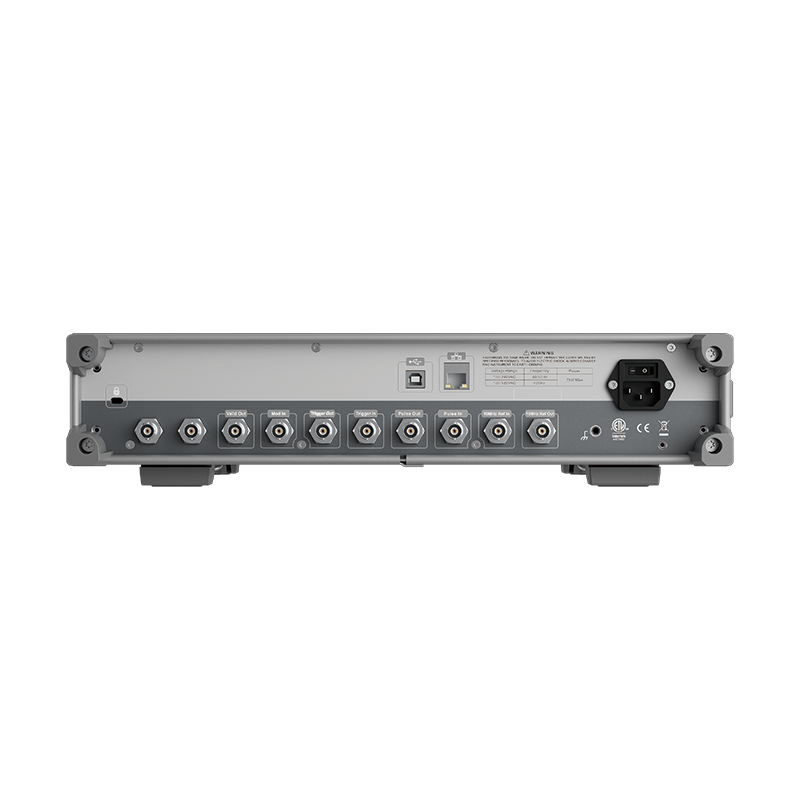
Waveform generators are widely used in electronics manufacturing, educational laboratories, communications development, automotive electronics, industrial automation, semiconductor research, and scientific testing. They play an essential role in product design, validation, troubleshooting, and quality control. UNI-T waveform generators provide versatile signal generation capabilities for users across a broad range of industries and applications.
A signal generator is an electronic test instrument that produces controlled electrical signals with defined frequencies, amplitudes, and modulation characteristics. Engineers use signal generators to test, validate, and troubleshoot electronic circuits, communication systems, and RF devices. UNI-T signal generators provide stable and accurate signal output for applications ranging from basic circuit verification to advanced research and development.
Signal generators are commonly used to simulate real-world signals for testing electronic equipment and communication systems. Applications include receiver sensitivity testing, amplifier characterization, RF component validation, wireless communication development, and educational laboratory experiments. UNI-T signal generators help engineers evaluate system performance under repeatable and controlled conditions.
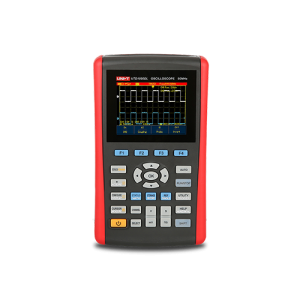
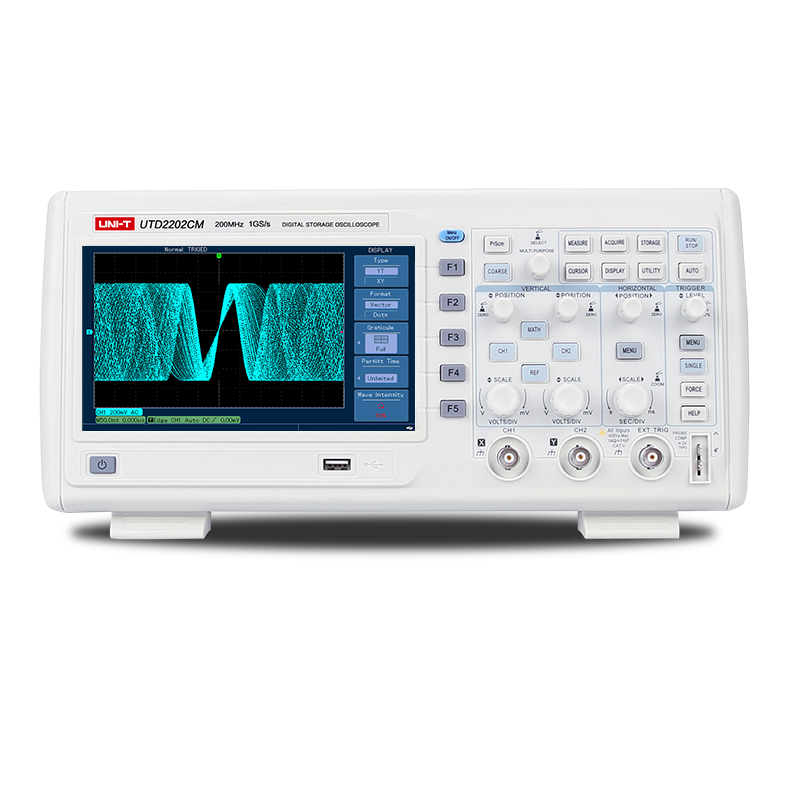
UNI-T High Resolution Oscilloscopes combine precise waveform acquisition, advanced analysis capabilities, and user-friendly operation in a cost-effective solution. Designed for engineers, researchers, and educators, they deliver accurate signal visualization and reliable measurement performance across a wide range of electronic testing applications.
A waveform generator is an electronic test instrument used to create electrical signals with specific frequencies, amplitudes, and waveform shapes. Common output signals include sine, square, pulse, ramp, and arbitrary waveforms. Engineers use waveform generators to simulate real-world operating conditions, verify circuit performance, and evaluate electronic devices during design, development, and troubleshooting. UNI-T waveform generators provide flexible signal generation capabilities for research, education, manufacturing, and electronic testing applications.
Waveform generators are used to provide controlled test signals for electronic circuits and systems. Typical applications include amplifier testing, filter characterization, sensor validation, communication system development, and embedded electronics debugging. By generating repeatable signals with precise parameters, a UNI-T waveform generator helps engineers evaluate product performance, identify design issues, and verify system functionality under different operating conditions.
A function generator produces standard waveforms such as sine, square, triangle, and pulse signals. An arbitrary waveform generator (AWG) allows users to create and output customized waveforms that simulate real-world signals or complex test conditions. A waveform generator is a broader category that may include both function generators and AWGs. UNI-T offers solutions ranging from basic function generation to advanced arbitrary waveform generation for diverse testing requirements.
Selecting the right waveform generator depends on factors such as output frequency, waveform type, sampling rate, channel count, modulation capabilities, and application requirements. General-purpose testing may only require standard waveforms, while advanced research or communication development often requires arbitrary waveform generation. UNI-T waveform generators provide multiple performance levels to support education, laboratory, manufacturing, and R&D environments.
Yes. High resolution oscilloscopes can capture small voltage fluctuations, switching ripple, and transient events more clearly than standard oscilloscopes. This helps engineers evaluate power quality, optimize converter performance, and identify efficiency issues. UNI-T High Resolution Oscilloscopes provide detailed waveform visibility for power electronics design and validation.
Bandwidth determines the highest signal frequency an oscilloscope can accurately measure, while resolution determines how precisely signal amplitudes can be displayed. Both parameters are important but serve different purposes. UNI-T High Resolution Oscilloscopes combine advanced resolution with strong signal acquisition performance to support accurate waveform analysis.