











FAQs
Sensitivity determines how well an analyzer can detect low-level signals, while dynamic range describes its ability to measure weak signals in the presence of stronger ones. Higher sensitivity and wider dynamic range improve measurement reliability and make it easier to identify small signals, interference, harmonics, and spurious emissions. These characteristics are particularly important in modern RF and wireless testing applications.
Yes. Spectrum analyzers are widely used to evaluate wireless communication signals such as Wi-Fi, Bluetooth, cellular, IoT, and other RF transmissions. They can help measure signal strength, occupied bandwidth, channel behavior, and interference levels. Depending on the model and available functions, UNI-T spectrum analyzers can support a variety of wireless testing and troubleshooting tasks.
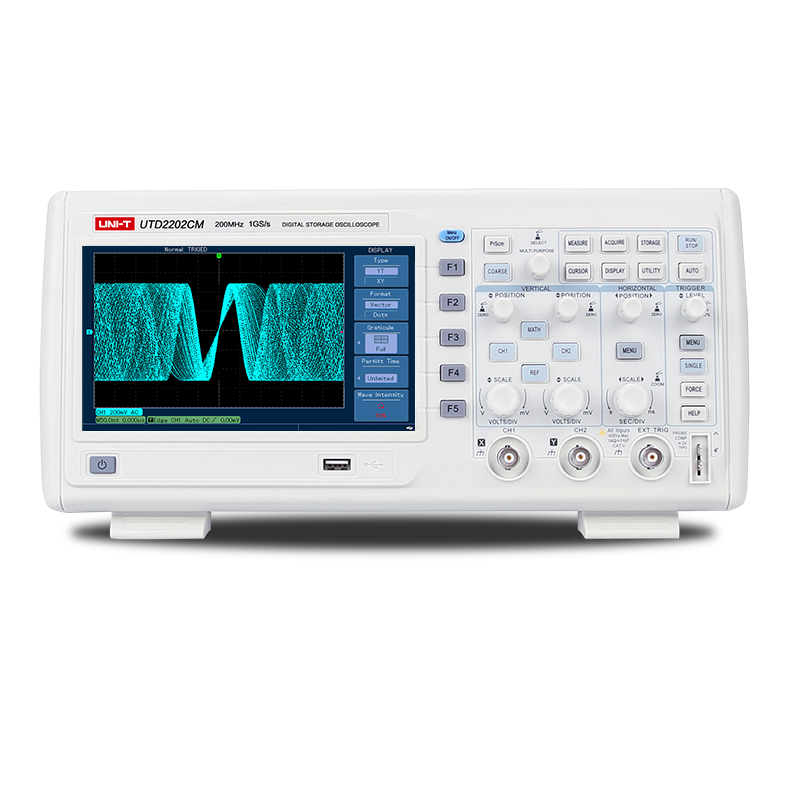
A spectrum analyzer displays signals in the frequency domain, showing how signal power is distributed across frequencies, while an oscilloscope displays signals in the time domain, showing voltage changes over time. Both instruments provide valuable but different perspectives of a signal. Engineers often use UNI-T spectrum analyzers and oscilloscopes together to gain a more complete understanding of system performance.
A signal analyzer is used to measure, visualize, and characterize electronic and RF signals. It can help evaluate signal power, frequency, bandwidth, modulation quality, and spectral characteristics. UNI-T signal analyzers are commonly used in wireless communication development, RF testing, product validation, education, and maintenance applications where accurate signal analysis is essential.
A spectrum analyzer focuses on measuring signal power across a frequency range and is widely used for spectrum monitoring, interference detection, and RF troubleshooting. A signal analyzer typically includes additional analysis capabilities, such as modulation and vector signal measurements, allowing deeper evaluation of communication signals. UNI-T offers solutions that support both spectrum analysis and advanced signal characterization requirements.
Spectrum and signal analyzers are used across a variety of industries, including wireless communications, electronics manufacturing, EMC testing, automotive electronics, aerospace, education, and IoT development. They help engineers verify signal quality, identify sources of interference, evaluate transmitter performance, and ensure compliance with technical standards. UNI-T analyzers support both laboratory and field-testing environments.
Selecting the right analyzer depends on your testing requirements, including frequency range, measurement accuracy, signal type, and required analysis functions. Users should also consider sensitivity, dynamic range, phase noise, and portability. UNI-T provides spectrum and signal analyzers designed for applications ranging from basic RF measurements to advanced wireless communication testing.
Important specifications include frequency coverage, resolution bandwidth (RBW), displayed average noise level (DANL), phase noise, dynamic range, sweep speed, and amplitude accuracy. These parameters determine how effectively an analyzer can detect weak signals, resolve closely spaced frequency components, and provide accurate measurements. Choosing the right specifications helps ensure reliable test results.
A real-time spectrum analyzer continuously captures and analyzes signals within a specified bandwidth without measurement gaps. This allows it to detect short-duration, intermittent, or rapidly changing signals that may be missed by conventional swept spectrum analyzers. Real-time spectrum analysis is especially useful for interference hunting, spectrum monitoring, and wireless system troubleshooting.
A spectrum analyzer is an electronic test instrument that displays signal amplitude as a function of frequency. Unlike an oscilloscope, which shows changes in voltage over time, a spectrum analyzer reveals frequency components within a signal. Engineers use UNI-T spectrum analyzers to identify harmonics, spurious emissions, interference sources, and signal distortion in RF, wireless communication, and electronic design applications.