












FAQs
Important specifications include maximum output frequency, sample rate, waveform memory depth, vertical resolution, output amplitude range, and modulation functions. Channel synchronization and waveform editing capabilities may also be important for complex applications. Understanding these parameters helps ensure that a UNI-T waveform generator can accurately generate the signals required for your testing and validation tasks.
Waveform memory depth determines how many points can be stored to represent a signal. Greater memory depth allows more complex waveforms and longer signal sequences to be generated without sacrificing detail. This is especially important for communication testing, protocol simulation, and arbitrary waveform generation. UNI-T waveform generators offer powerful waveform storage capabilities to support advanced signal generation requirements.
Signal quality is influenced by parameters such as frequency accuracy, waveform resolution, harmonic distortion, jitter, noise, and output stability. Higher-performance waveform generators provide more accurate and cleaner signals, improving measurement reliability. UNI-T waveform generators are designed to deliver stable signal output and dependable performance across a wide range of electronic testing applications.
Waveform generators are widely used in electronics manufacturing, educational laboratories, communications development, automotive electronics, industrial automation, semiconductor research, and scientific testing. They play an essential role in product design, validation, troubleshooting, and quality control. UNI-T waveform generators provide versatile signal generation capabilities for users across a broad range of industries and applications.
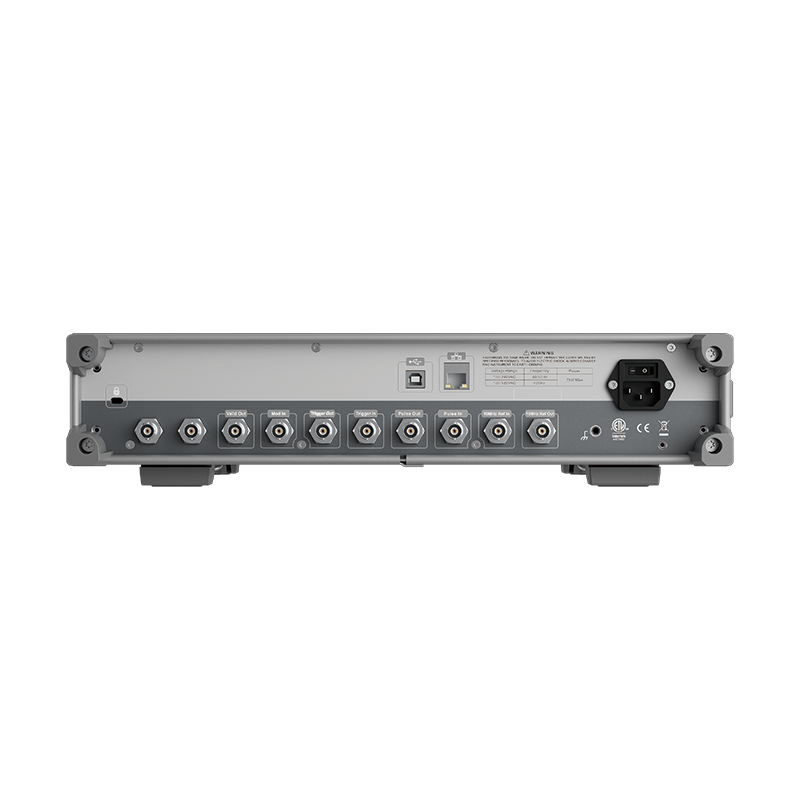
A waveform generator is an electronic test instrument used to create electrical signals with specific frequencies, amplitudes, and waveform shapes. Common output signals include sine, square, pulse, ramp, and arbitrary waveforms. Engineers use waveform generators to simulate real-world operating conditions, verify circuit performance, and evaluate electronic devices during design, development, and troubleshooting. UNI-T waveform generators provide flexible signal generation capabilities for research, education, manufacturing, and electronic testing applications.
Waveform generators are used to provide controlled test signals for electronic circuits and systems. Typical applications include amplifier testing, filter characterization, sensor validation, communication system development, and embedded electronics debugging. By generating repeatable signals with precise parameters, a UNI-T waveform generator helps engineers evaluate product performance, identify design issues, and verify system functionality under different operating conditions.
A function generator produces standard waveforms such as sine, square, triangle, and pulse signals. An arbitrary waveform generator (AWG) allows users to create and output customized waveforms that simulate real-world signals or complex test conditions. A waveform generator is a broader category that may include both function generators and AWGs. UNI-T offers solutions ranging from basic function generation to advanced arbitrary waveform generation for diverse testing requirements.
Selecting the right waveform generator depends on factors such as output frequency, waveform type, sampling rate, channel count, modulation capabilities, and application requirements. General-purpose testing may only require standard waveforms, while advanced research or communication development often requires arbitrary waveform generation. UNI-T waveform generators provide multiple performance levels to support education, laboratory, manufacturing, and R&D environments.